Underlayments Demystified: Sound, Moisture & Thermal — Which to Use Where for Perfect Flooring Performance
Flooring underlayments are essential for enhancing comfort and protecting floors in various buildings. The choice of underlayment is influenced by factors such as floor location, subfloor material, and specific performance needs.
- Underlayments control sound, block moisture, and improve thermal insulation. They are crucial for maintaining the integrity of flooring materials.
- Different types of underlayments are needed for homes, apartments, and commercial spaces to meet construction standards.
- Selecting the right underlayment involves considering the subfloor type and the specific requirements of each room.
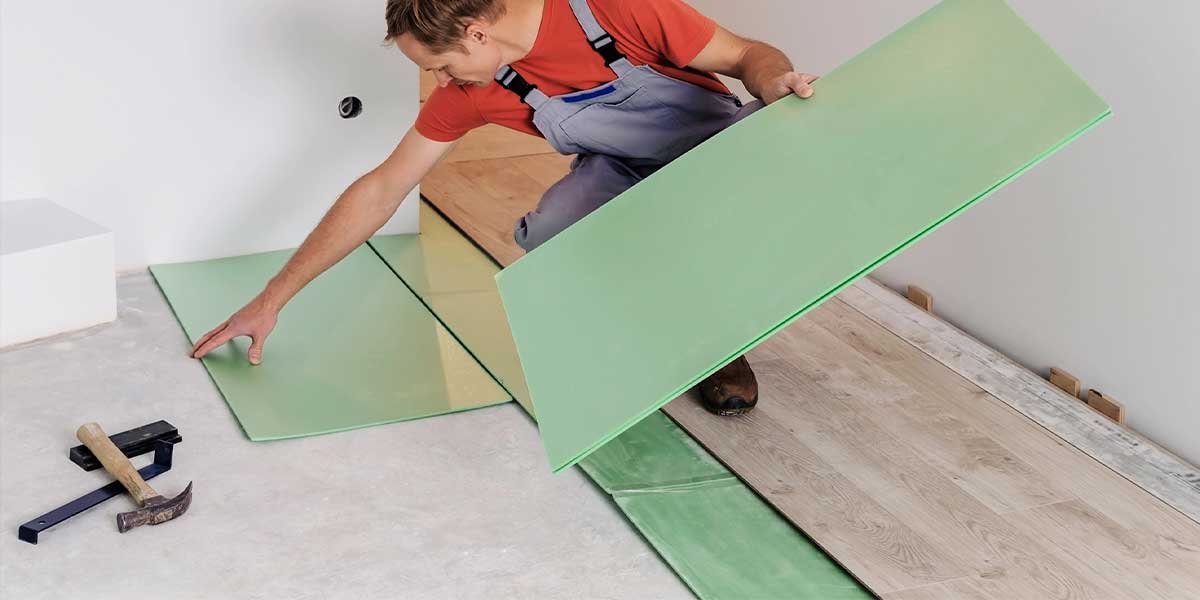
Flooring underlayments serve to protect floors and enhance comfort within buildings. Positioned between the subfloor and the finished flooring, they effectively manage sound transmission, prevent moisture vapor intrusion, and enhance thermal insulation, contributing to overall flooring performance.
Flooring underlayments play a critical role in protecting floors and improving comfort inside buildings. Installed between the subfloor and finished flooring, underlayments help control sound transmission, block moisture vapor, and improve thermal insulation.
Choosing the right underlayment depends on the floor location, the subfloor material, and the building’s performance requirements. Homes, apartments, and commercial buildings often require different types of underlayment to meet construction standards and long-term durability goals.
Understanding how each underlayment works helps property owners and installers select the right solution for every room.
What Flooring Underlayments Do and Why They Matter
Underlayments act as a protective layer that improves the performance of finished flooring materials such as laminate, engineered hardwood, luxury vinyl plank, and hardwood flooring.
Key Functions of Flooring Underlayments
Most underlayments provide one or more of the following benefits:
- Sound control to reduce footstep noise between floors
- Moisture protection to block vapor from concrete slabs
- Thermal insulation to reduce heat loss through floors
- Surface smoothing to minimize small subfloor imperfections
Without the proper underlayment, flooring materials may experience premature wear, moisture damage, or uncomfortable temperature variations.
Sound-Reducing Underlayments for Multi-Level Spaces
Noise control becomes important in apartments, condominiums, and multi-story homes. Hard flooring surfaces can transmit impact sounds such as footsteps or dropped objects through the building structure.
Acoustic underlayments reduce these vibrations and help create quieter living spaces.
Impact Insulation Class (IIC) Ratings
Acoustic performance is measured using Impact Insulation Class (IIC) ratings. Testing procedures are standardized by organizations such as ASTM International.
Typical requirements include:
- IIC 50 or higher for residential construction
- IIC 55 or higher for commercial buildings
- IIC 67–73 for high-performance acoustic systems
Higher ratings indicate better sound reduction between floors.
Common Acoustic Underlayment Materials
Sound-reducing underlayments are typically made from dense materials that absorb vibration.
Common options include:
- Cork underlayment – a natural material with strong sound absorption
- Rubber composites – dense recycled rubber designed for impact control
- Cross-linked polyethylene foam – lightweight foam used under floating floors
These materials reduce footstep noise and improve acoustic comfort in shared buildings.
Moisture Barrier Underlayments for Basements and Concrete Floors
Concrete slabs continuously release moisture vapor. Without a vapor barrier, this moisture can damage flooring materials such as laminate, engineered wood, or luxury vinyl plank.
Moisture barrier underlayments prevent vapor from reaching the finished floor.
Vapor Barrier Standards
Moisture protection is measured by permeance ratings, which indicate how much water vapor passes through a material.
Standards from ASTM International define vapor retarder performance.
Important specifications include:
- Class A vapor barriers with permeance below 0.3 perms
- Polyethylene plastic films ranging from 6-mil to 15-mil thickness
- Overlapping seams sealed with moisture-resistant tape
These barriers are commonly required in:
- Basements
- Ground-level concrete slabs
- Newly poured concrete floors
Installing a proper moisture barrier prevents floor warping, adhesive failure, and mold growth.

 Posted on Google
Thermal Underlayments for Comfort and Energy Efficiency
Floors located above cold spaces can lose significant heat during winter. Thermal underlayments provide insulation that improves indoor comfort and reduces energy loss.
R-Value Performance
Thermal insulation is measured using R-value, which indicates resistance to heat transfer.
Most flooring underlayments offer insulation values between R-1 and R-4.
Higher R-values provide better thermal performance.
Materials Used for Thermal Underlayment
Common insulating materials include:
- Closed-cell foam boards that trap air inside sealed bubbles
- Cork underlayment with natural insulating properties
- Rubber underlayment that combines cushioning with thermal resistance
- Reflective foil layers that redirect radiant heat back into the room
Thermal underlayments work best in areas where temperature differences occur.
Locations That Benefit Most from Thermal Underlayments
These spaces typically experience higher heat loss:
- Floors above garages
- Floors above crawl spaces
- Basement slab installations
- Rooms built over unheated areas
Adding thermal insulation beneath flooring improves comfort and reduces energy waste.
How to Choose the Right Flooring Underlayment
Selecting the correct underlayment depends on the subfloor type, room location, and flooring material.
Underlayment Selection Guide
Use these guidelines when choosing a product:
Concrete subfloors
- Install a moisture vapor barrier
- Use polyethylene film or a combination of moisture-blocking underlayment
Second-floor installations
- Choose acoustic underlayment for sound control
- Look for high IIC ratings
Floors above cold spaces
- Select thermal underlayments with higher R-values
- Closed-cell foam or cork works well
Floating floors, such as laminate or vinyl
- Use foam underlayment designed for floating floor systems
Some products combine sound reduction, moisture protection, and thermal insulation in one multi-purpose layer.